
| TRAP DATA | ||||
| MONTH | Rat | Possum | Weasel | Stoat |
| January | 139 | 113 | 8 | 3 |
| February | 147 | 71 | 5 | 1 |
| March | 146 | 88 | 1 | 1 |
| April | 232 | 150 | 6 | 1 |
| May | 238 | 216 | 4 | 0 |
| OTHER SPECIES | ||||
| MONTH | Cat | H. hog | Ferret | Other |
| January | 0 | 0 | 0 | 3 |
| February | 0 | 1 | 0 | 3 |
| March | 0 | 0 | 0 | 6 |
| April | 1 | 1 | 0 | 11 |
| May | 0 | 0 | 0 | 23 |
| YEARLY COMPARISON | ||||
| Rat | Possum | Weasel | Stoat | |
| 2024 | 644 | 19* | 19 | 14 |
| 2025 | 1286 | 1352 | 24 | 19 |
| 2026 so far | 664 | 422 | 20 | 6 |
| *Not including AT220 kills | ||||
| Cat | H.hog | Ferret | Other | |
| 2024 | 7 | 11 | 1 | 14 |
| 2025 | 7 | 13 | 1 | 58 |
| 2026 so far | 1 | 2 | 0 | 46 |
Week One from Senior Ranger Andy: I started the week trapping in the South of the forest with new volunteer Alex Ruston on the Yellow trapline. Towards the end of the day on the way up a ridge, to re-join the public track, Alex noticed a hura or giant centipede (Cormocephalus rubriceps) a fast-moving, carnivorous predator that can reach up to 25 cm in length.

“The centipede’s poison claws are an impressive and unique feature of centipedes. These large, robust, pincer-like appendages – known as forcipules – are located on the first segment following the head and are actually modified legs, which function as jaws. They are jointed, open and close in horizontal plane and end in sharp claws”. – Predator Free NZ.
Photo Credit: Andy Avery
Craig and I went out trapping West of Clements Quarry with Steve Detlaff and Michael Kissick. We installed some additional tree rat traps and continued adding ramps to our existing possum traps in the area. While trapping on the Umber Trapline I took a slight detour along a river valley and discovered a huge tree that a fallen across the river. The underside of the tree was home to a large population of tokoriro or cave Wētā.
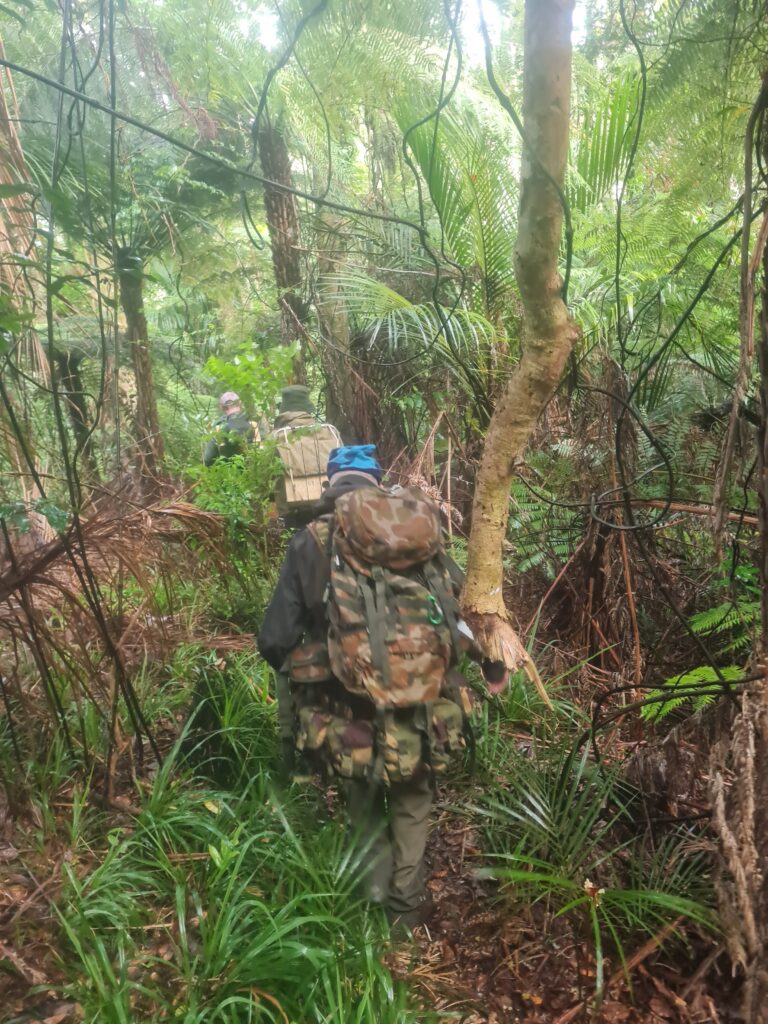
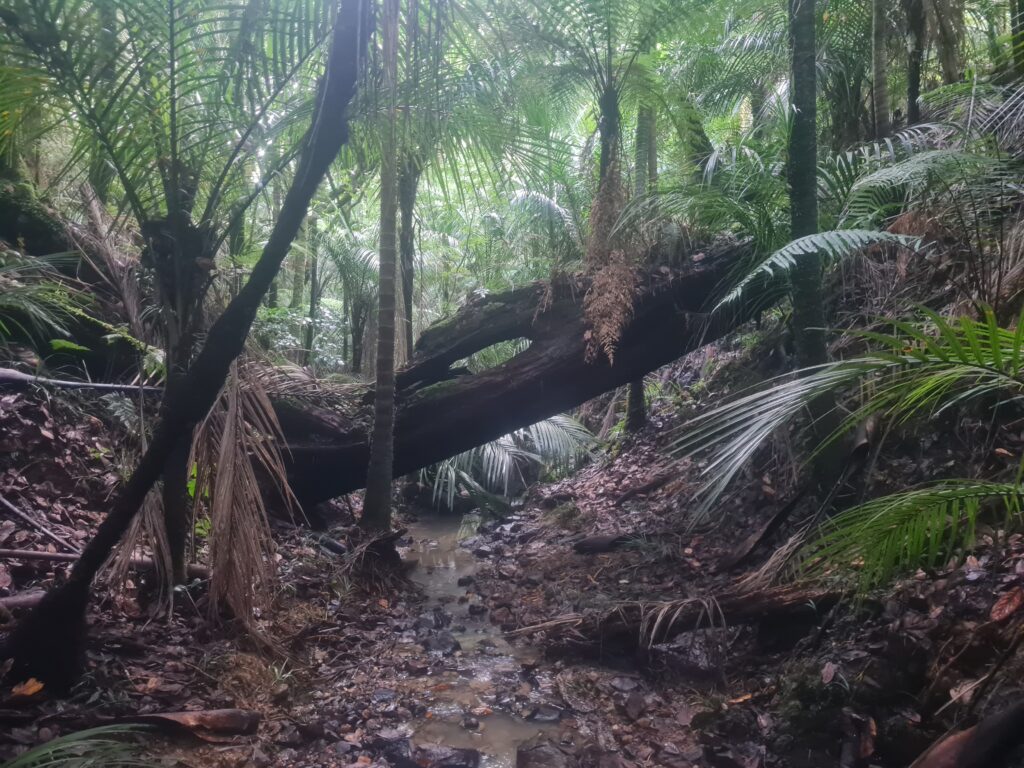
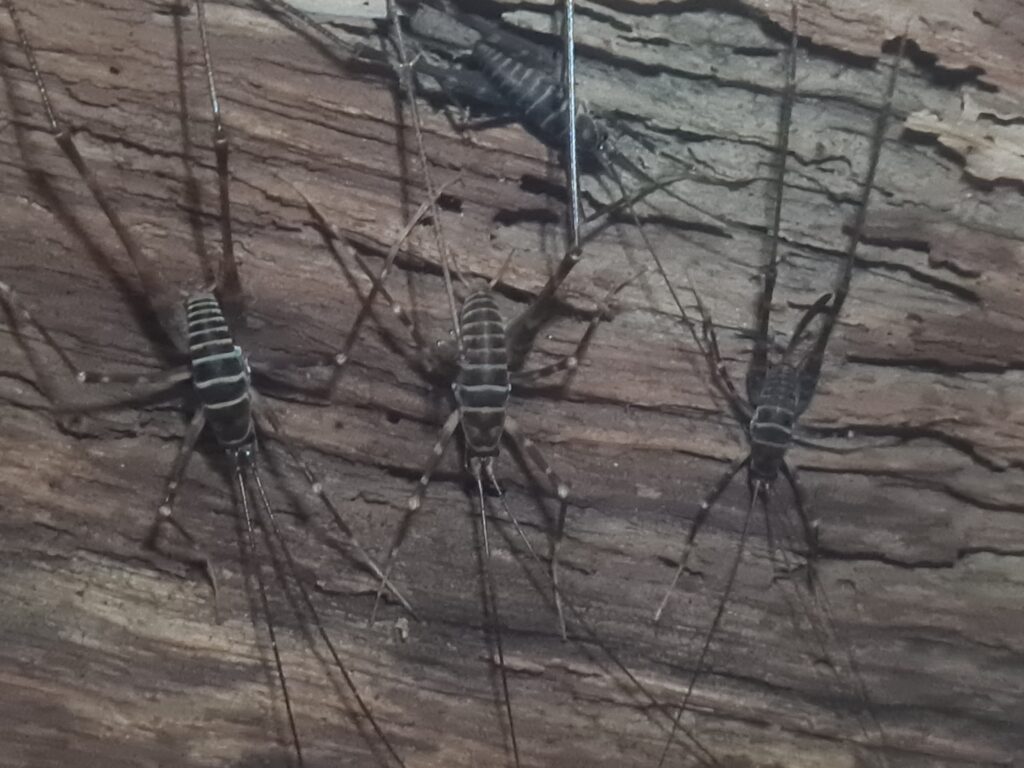
Photo Credits: Andy Avery
Ranger Craig: We’ve had some pretty encouraging results from the tracking tunnels last week, with the RTI at 18% overall. Down from 39% in February, and 47% in September before the start of this summer’s toxin operations.
Taking away 2 of the lines G and L, which are on the edge/outside the control area gives us a 9% RTI.0 pt
| A -0% |
| B -10% |
| E -10% |
| F -20% |
| G – 60% (On the edge of toxin area) |
| H -20% |
| I -10% |
| J -0% |
| K -0% |
| L – 50 % (Control line outside of toxin area) |
| All 100 tracking tunnels: 18 |
| 90 tracking tunnels inside toxin area (L not included): 14% |
| 80 tracking tunnels inside core (G & L not included): 9% |
Elsewhere I’ve continued to add planks to our SA traps to make them more accessible to feral cats.
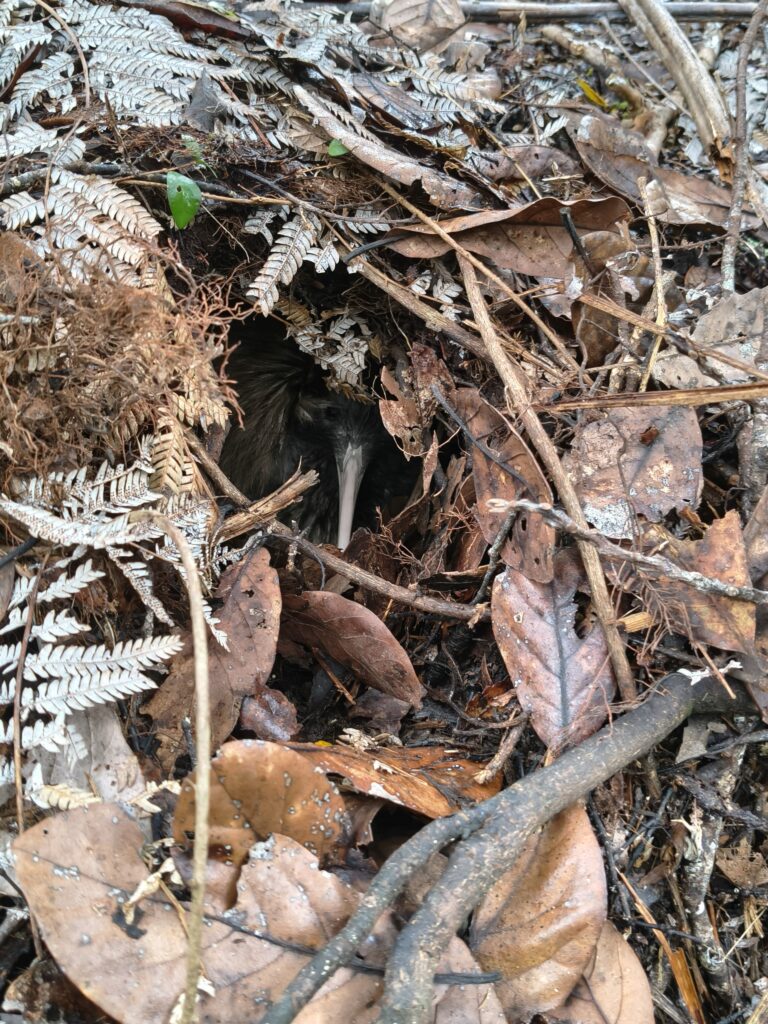
When exploring a ridge nearby the Emerald line I had a very lucky and exciting meeting with a kiwi! I just caught a glimpse of its beak as I moved past its little burrow. Luckily, I had a trail camera with me, so hopefully we will get some footage of it emerging from the burrow.
Photo Credit: Craig Young
Ranger Rose: This week was a little less poetic, a solid day spent servicing the Red Western trapline. More gore, guts and drizzle. Majorly envious of Craig’s encounter… and excited to muddy my new shiny boots. Many Thanks! (Our three Rangers received new boots, thanks to Pub Charity for their generous grant!)
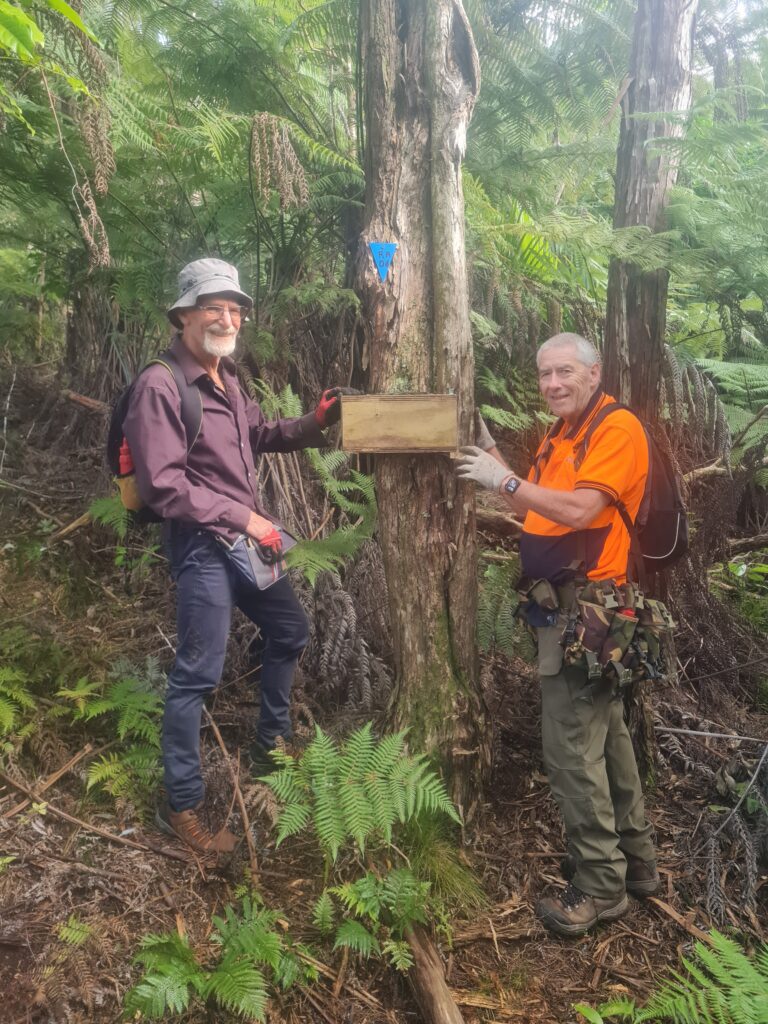
Week Two from Senior Ranger Andy: I started the week trapping in the Whau Valley and Coronation Reserve with Volunteers Jarp and Steve. Steve Detlaff has now trapped over x1000 pest animals for the Trust.
Photo Credit: Andy Avery
I am happy to report that we have been hearing kiwi out in the ngahere over the last 10 nights. The only exception, so far, is the listening site at the top of Clements Quarry.
While out scouting potential tracks for pest control with Rose and Craig to the West of the Quarry we found ourselves pushing through a wet landscape, thick with Parataniwha, fungi and fallen trees. On the small transparent jelly-like flowers on the underside of the parataniwha leaves, in many cases, we noticed small shrimp-like crustaceans or land hoppers.aka Makawe hurleyi.
We also found some “Dead man’s fingers” or a fungi in the Xylaria genus, most commonly Xylaria polymorpha emerging from a rotten tree branch and a yellow slimemould.
“Slime moulds are an informal group of organisms that can live freely as single cells or gather together to form multi-cellular structures. Although they may look like fungi they are classed as protists, so neither plant, animal or fungus.”
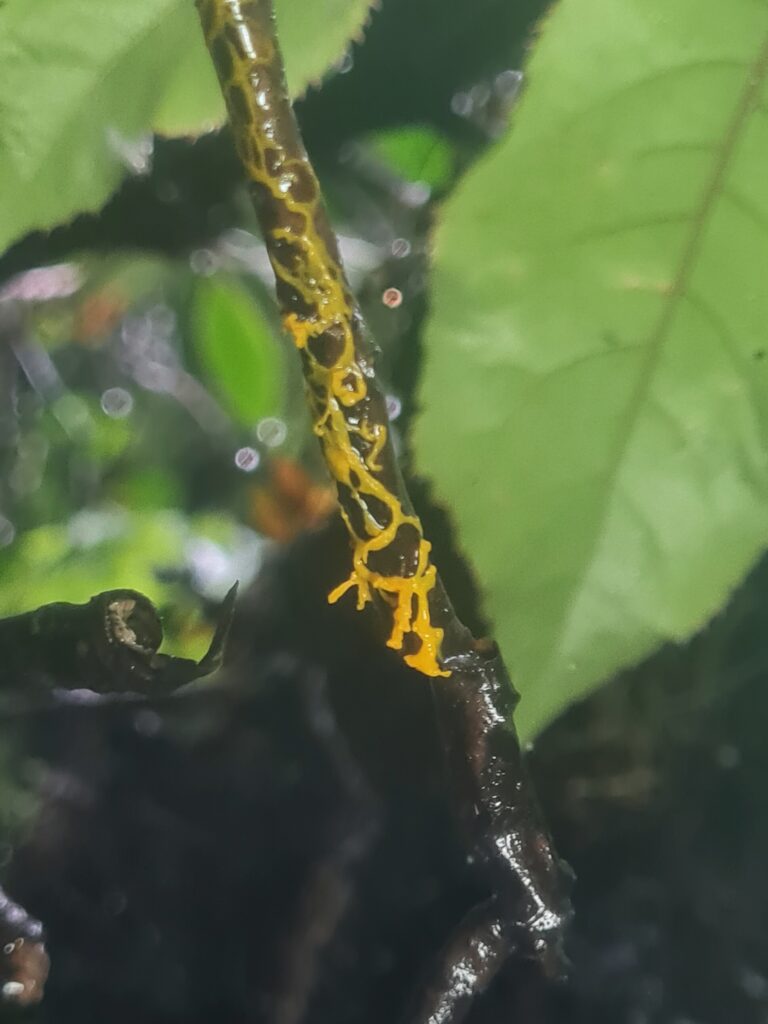
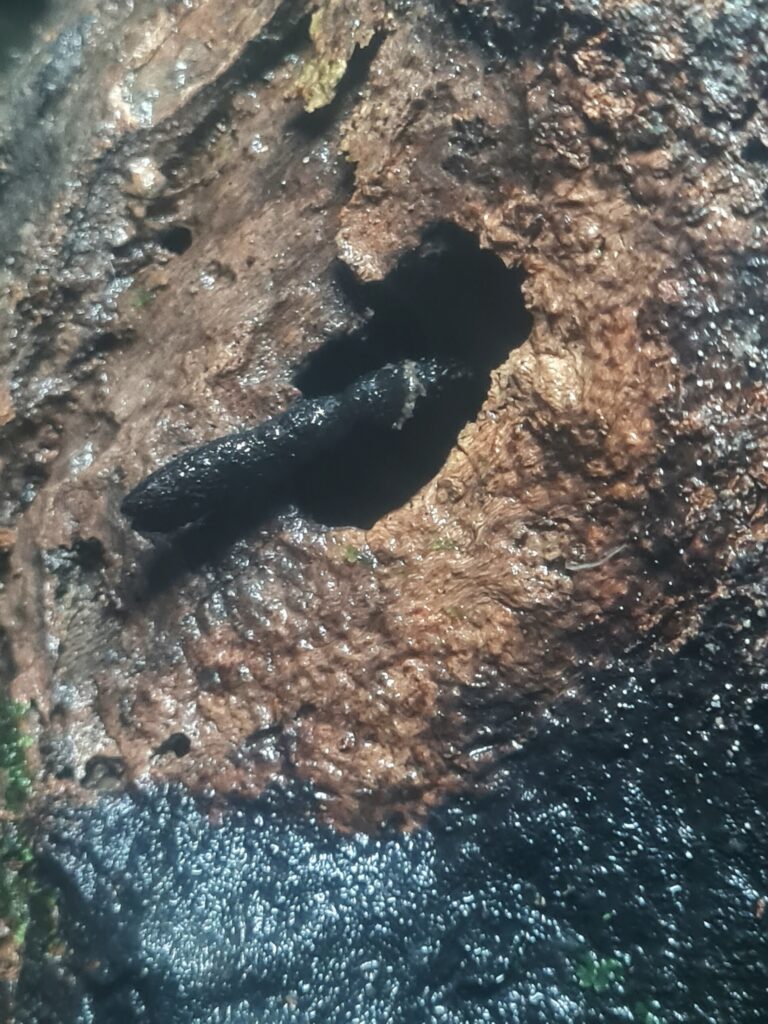
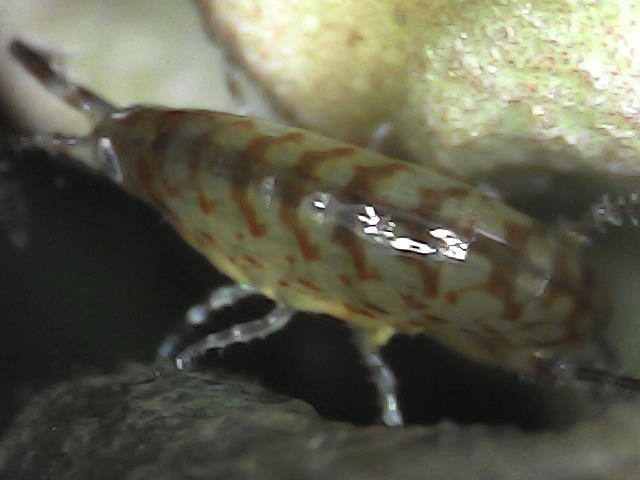
Photo Credits: Andy Avery
A solid week of pest control in the Pukenui. We’ve had help in the bush from Northtec students Alex and Beniaih, Michael Kissick as well as Pete Dooley, Peter Luke, Steve in the cCoronation Reserve and Mike Bray on the buffer line. 51 x possums and x55 rats this week. (see attached maps). Good team effort all. Thank you.
Ranger Craig: I have the take numbers from the second pulse of ratabate completed in December, maps are attached. Unfortunately, DOC did not fully record their takes, but did give an indication of take (very high) for their blocks. We once again saw many ripped off bases in DOC blocks so possum interference will be affecting this high result to some extent. The take/maps for the DOC area are highly interpreted.
The general pattern is similar to Septembers take – high take in the Eastern and Western edges, low take through the middle. There was a slight increase in take overall:
Overall take was 49.5%, up from 45.5% in September.
Lowest takes were in Blocks 16 (1%), and 20 (7%)
Highest takes were in blocks 27 (95%) and 4 (93%)
Ranger Rose: A simple line, just to share that despite feeling grizzly, a day spent with Andy and Craig, letting our inner naturalists explore new lands, resolved all glumness. Loving all rainy days in this forest !
Week Three From Senior Ranger Andy: It really has been an excellent and exciting week for Fungal discoveries. Amongst many were the “squid stinkhorn” (Pseudocolus fusiformis) and a red waxgill (Hygrocybe cantharellus).
Weaving amongst the giant Kahikatea trees a kiwi leaves her tracks in a muddy river valley in the South West of the Pukenui. I have put a trail camera up in the area so fingers crossed that she returns.
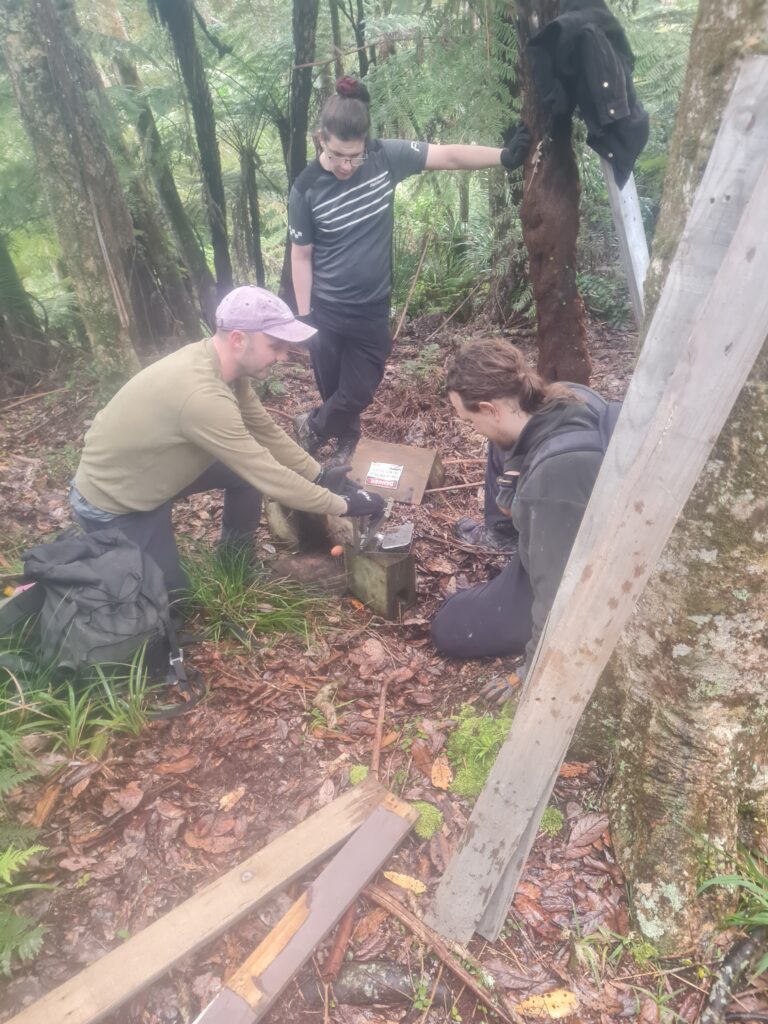
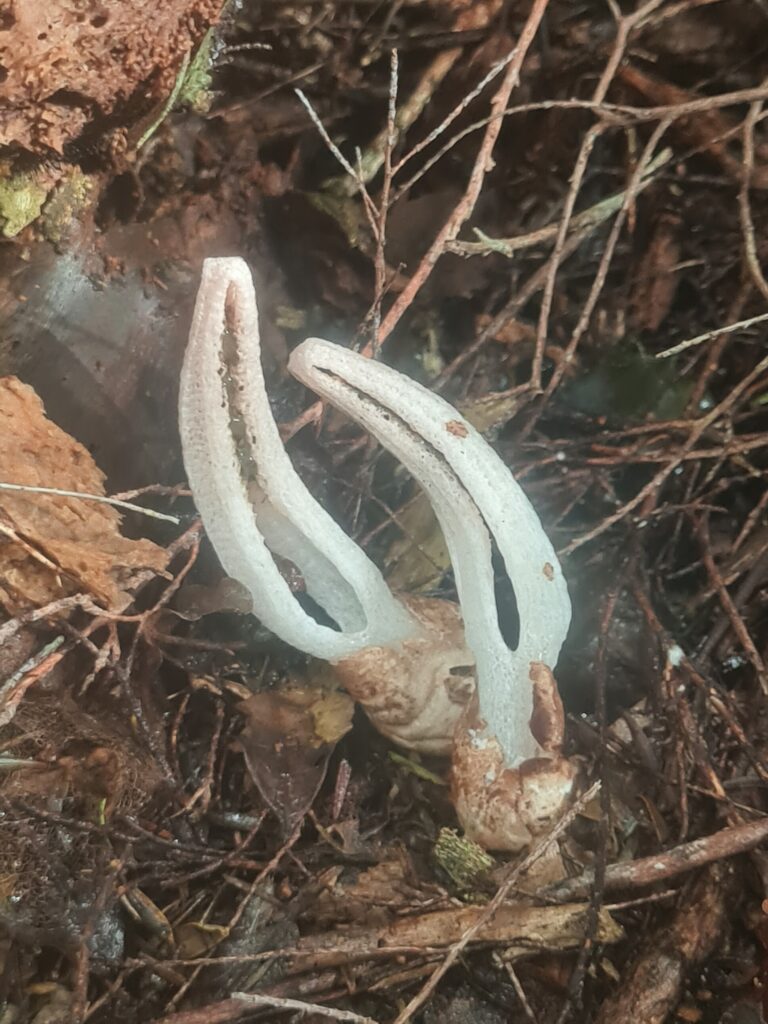
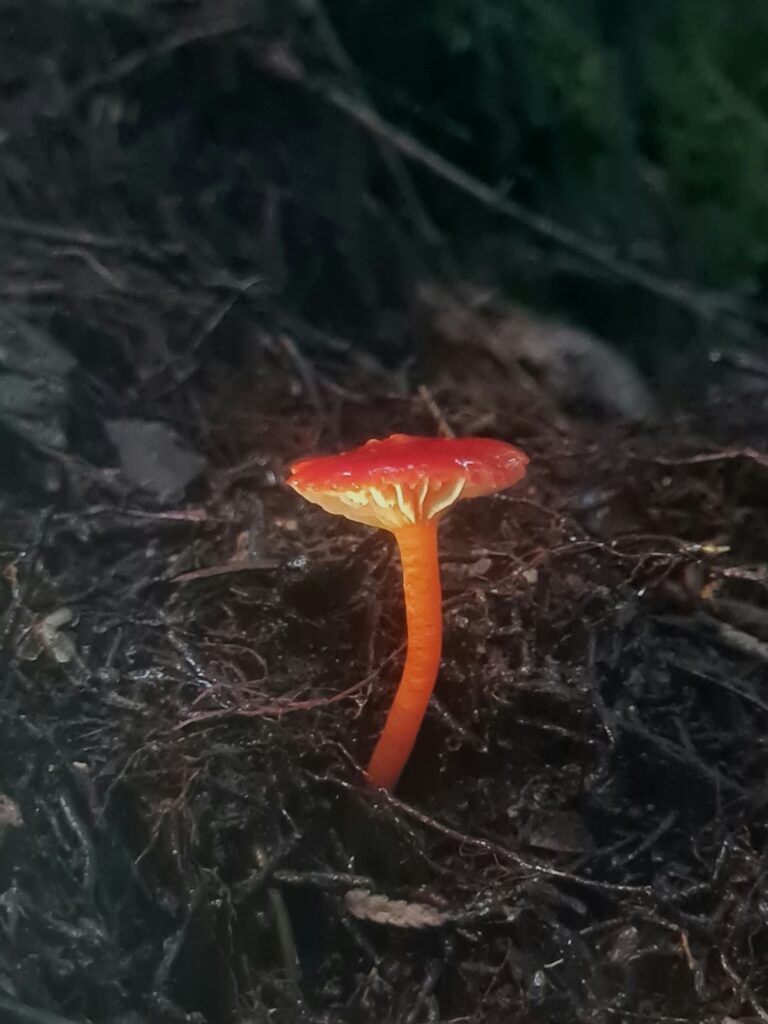
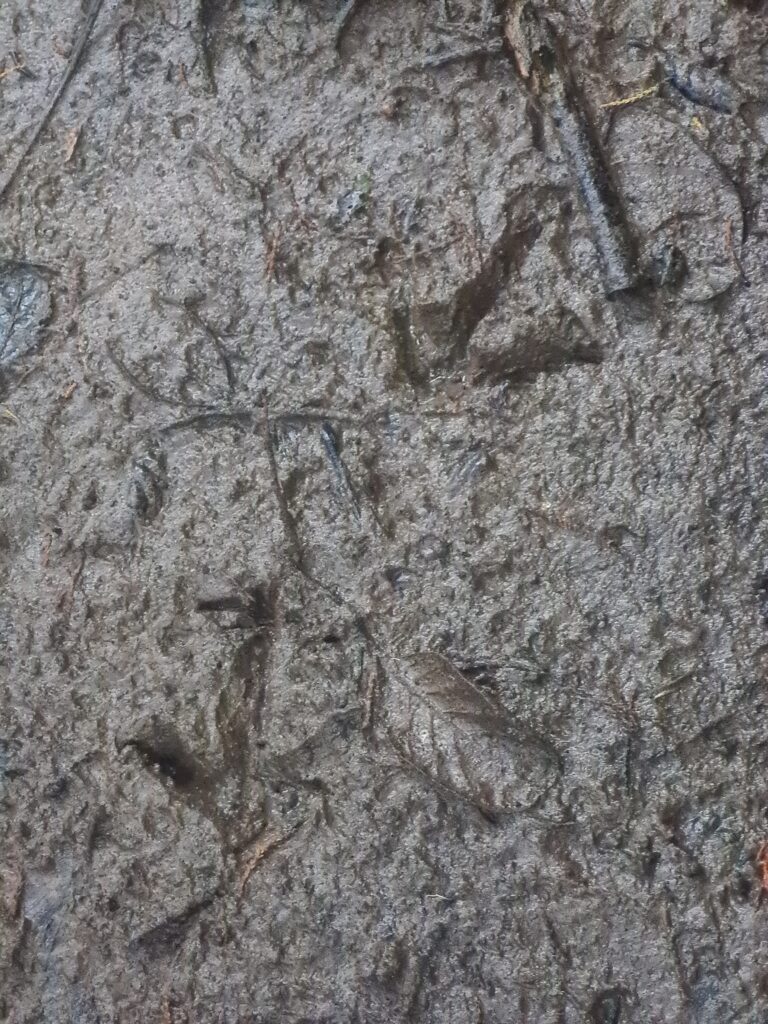
Photo Credits: Andy Avery
Ranger Craig: Continued with the possum work in Woods Rd – we believe 600 would be a conservative estimate of how many possums have been removed since the mission started.
As Andy has mentioned it’s been a lovely week for fungi in the forest. Two that I enjoyed seeing this week are:
Urnula campylospora – brown forest cup. We’ve seen these fairly frequently but never this large – they were 4-5cm in diameter.
Mycena ura – a beautiful pinky red fungus that looks like it should just collapse with that delicate stem.

Photo Credits: Craig Young
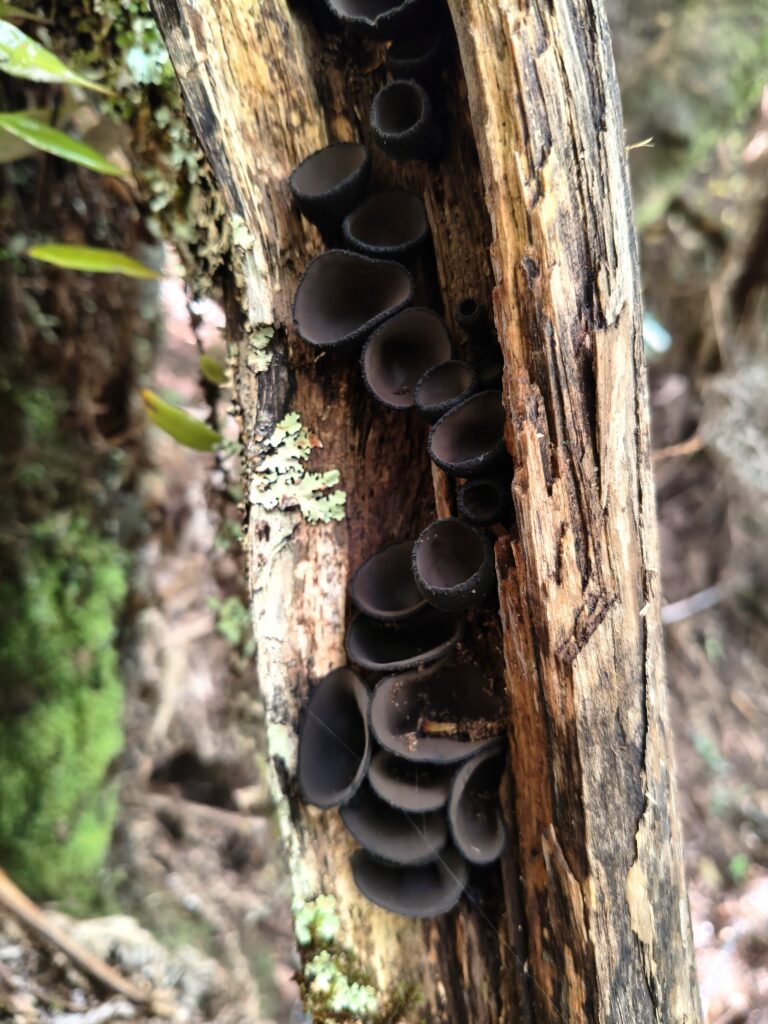
Week Four from Senior Ranger Andy: I have been out trapping this week with both Beniaih, Ryan and the other Rangers. We continue to improve our trapping network and have been slowly but surely adding planks to all of our Steve Allen, Sentinel and AT220 traps.
There has been an abundance of fungal lifeforms again this week including a puffball-like mushrooms in the family Geastraceae. There are many different species and are commonly known as an Earth stars. Also an orange Waxgill and many Goldclub coral fungi poking their way through the damp leaf litter.
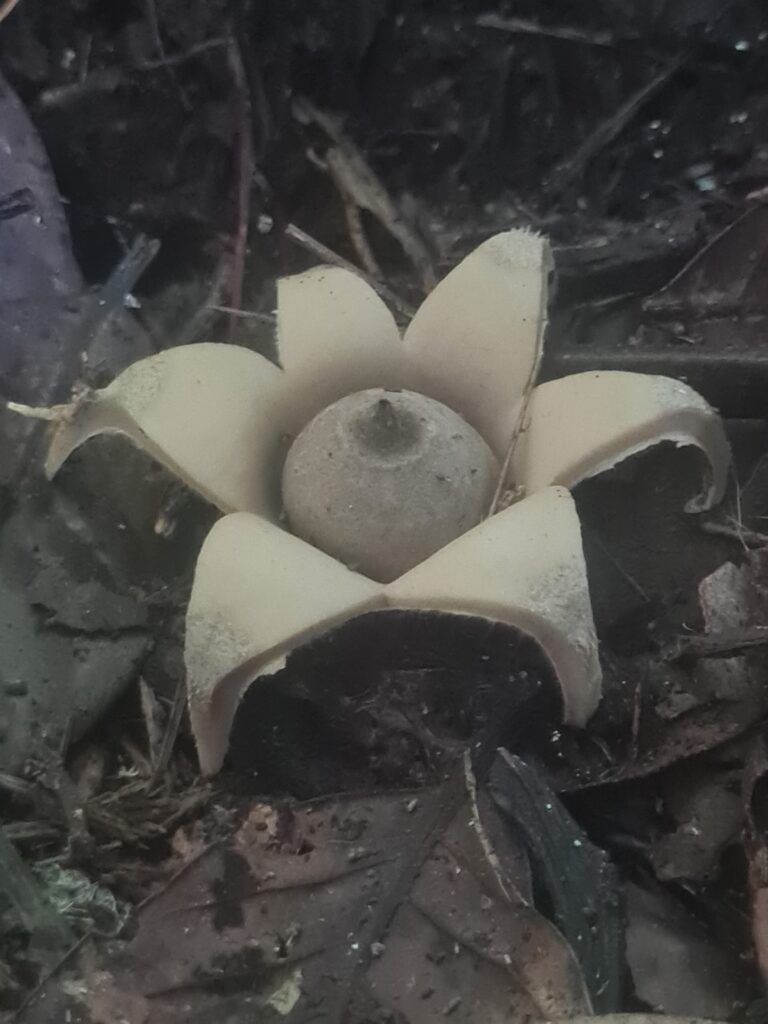
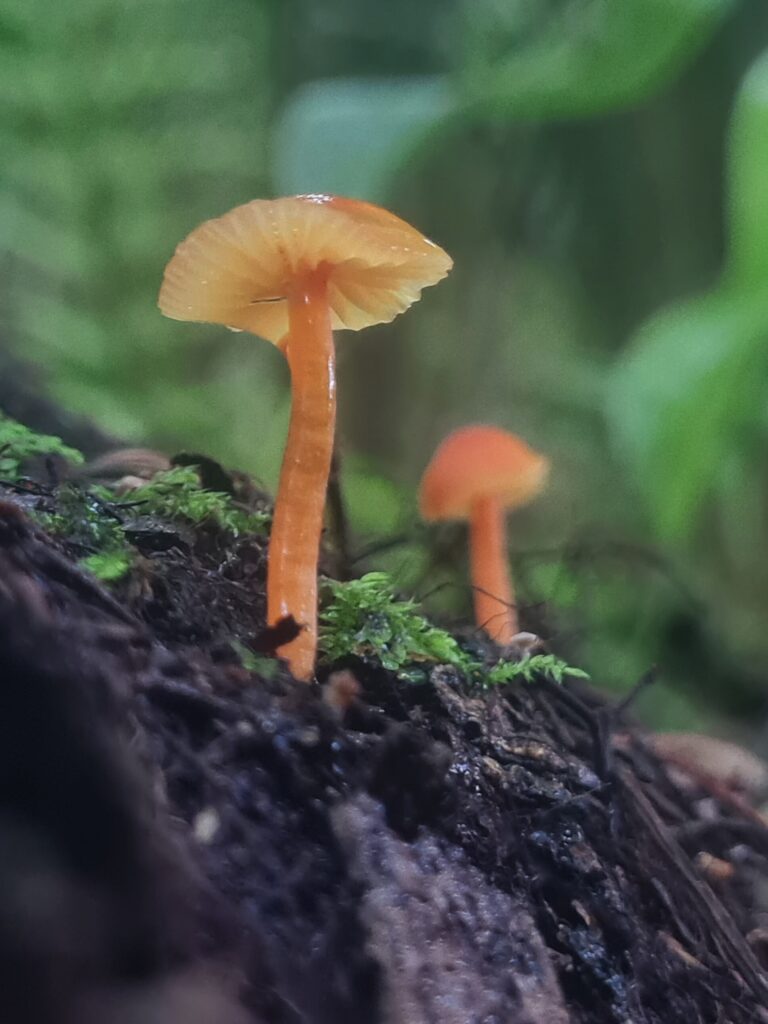
Photo Credits: Andy Avery
Ranger Craig: I started the week on the coronation trapline with volunteer Nikora. He has been helping out as part of the Environmental Management course at Northtec, along with 3 other students recently. Nikora will take over part of this trapline going forward and we’re hoping to get some other traps covered by the other students.
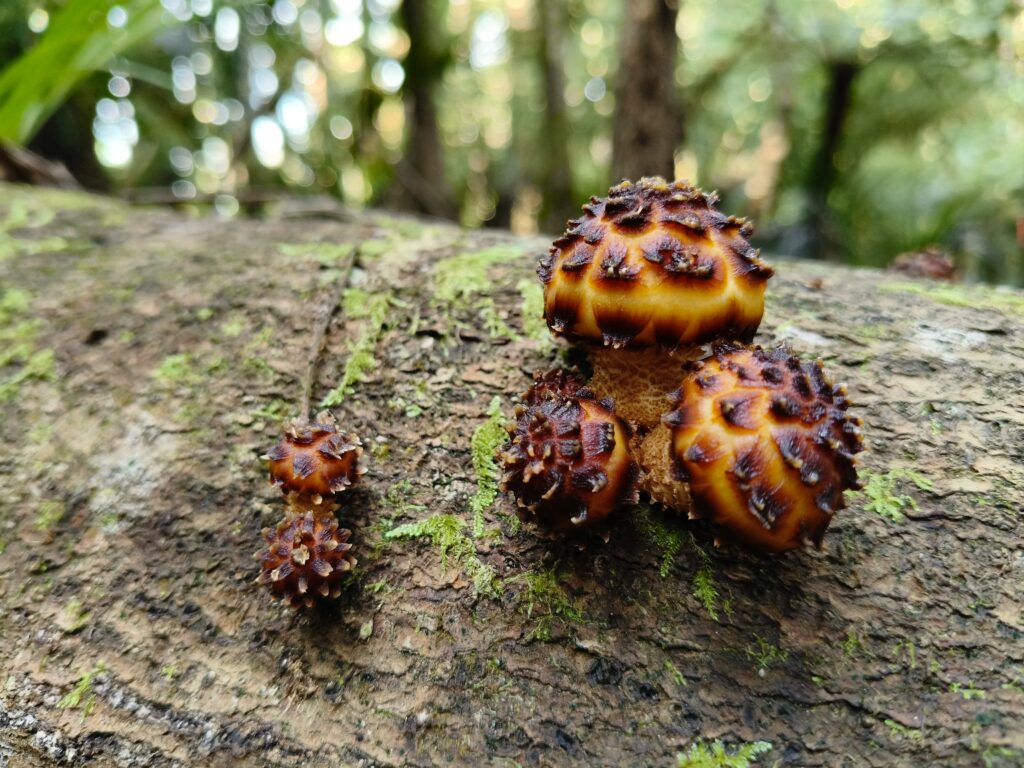
It’s been another feast of fungi this week! My favourite was the Pholiota glutinosa.
Photo Credit: Craig Young